Thursday, April 10, 2025

What They Look Like - Grannom Caddis

 More than 1,200 species of caddisflies inhabit the waters of North America. Many of them share the same habitat and live in close proximity to mayfly nymphs. However, unlike the free-living mayfly nymph, most species of caddisflies construct small tubular habitats in which they live. The building materials of the cases vary with the individual species; some species use sand or pebbles, others use bits of leaf debris, while other larger species use small sticks. Some species don’t build cases at all. Instead, they weave intricate, silken nets. Other species are free-living, like mayfly nymphs.


Caddisflies have a complete life cycle, consisting of an egg, larva, pupa, and adult. In typical caddisfly style, grannom larvae (the-worm like stage) build and live in cases. Unlike the cylindrical cases of most species, grannom cases are four-sided structures that taper chimney-like from front to rear. They build their cases with tiny bits of aquatic detritus, which are glued into shape with an adhesive secreted in their mouths. While several other species build portable cases that they carry with them when they move around searching or food, the grannom larvae are less adventurous. They secure their cases to rocks or the substrate with a silken anchor line. Gary Borger, in Naturals describes this unusual activity. “I’ve observed the Grannom letting itself out on a silk thread and hanging in midwaters; [which] may well be part of drift behavior.”


Caddisfly metamorphosis usually takes about 12 months, from egg to adult. After approximately eight months, the larva gradually begins the transformation into the pupal stage. The larva starts the process by cementing the case to the bottom, normally on the side of a rock. It then proceeds to close the opening, completely sealing itself within the sealed cavity. Slowly, the adult body parts (the wings, antennae, mouth, etc.) develop and take shape. The pupa’s legs mutate into miniature oars which assist the pupa when swimming. The pupa’s swimming movement closely resembles that of a water boatman.


Caddisfly hatches occur from April through October in both the East and the West. Members of the Brachycentridae family are among the first and most prolific hatches to occur. In the East, Brachycentrus numerous, (a.k.a. the American grannom) appears around the third week in April, just about the same time the Hendrickson hatches begin.

Larvae

By safely securing their case with their silken rope, the larvae are able to move in and out of the opening when searching for food without being swept away with the current. Grannom larvae have tannish-green, segmented bodies with dark ginger heads and legs. Typically, clusters of closely located individual grannom cases cover the same rock.


Pupae

Maturation complete, the papa pries the case open and swims to the surface, where emergence takes place. The Pupa emerges to the surface and, like many other aquatic insects, emerges from its pupal shuck into an adult. This process can take around 10 minutes which it quite a bit longer than other insects. 

In ten minutes, an emerging pupa can float a long distance which makes it easy pickin’s for the trout. Conversely, the adult takes off immediately after hatching and is much more difficult to catch.. Grannom emerge in huge numbers, with literally thousands of insects hatch simultaneously. Next time your out and see Grannoms, toss on that Pupa imitation under an Elk Hair Caddis!

See you on the water,
Lance


Monday, March 17, 2025

All New Trout Nut.com

 I logged into Trout Nut recently because someone asked me for good resources for aquatic insects. Well, when I did, I noticed that the site looked different than I remembered. 


I looked it over a little and the coolest (in my opinion) new thing is the new Streamside Feild Guide. Here I just put in a date (my birthday) and Ohio for the state. It brings up a seasonal guide of what insects I might see on the river during that time of the year. You can select from several species of insects and also select from nymphs, duns, adults, etc. Super easy and helpful!


I am really excited about this feature and look forward to using it to teach people about the world of aquatic insects and how that information can help them to be a more successful fly fisher. I'm also just a bug nerd. Head over to www.troutnut.com and give it a look!


Thursday, November 21, 2024

The Steel Mill

It dawned on me that when I moved to Ohio I would once again live in Steelhead Alley. I was excited to live so close to water similar to what I grew up on in western New York. When talking with my friend Jamie, we were discussing all of the trips that he and others have taken with project healing waters (PHW). Going to Michigan for King Slamon. Trips to the coast for False Albacore. I thought to myself, I wonder if these guys would like to come fish for Great Lakes Steelhead. I also know I would like to get the guys from my (PHW) chapter down south for some Appalachian Mountain fishing in those beautiful trout streams. So, I mentioned the idea of trading trips with Jamie as well as the lead of my PHW chapter. Well, the idea has really taken hold. I'm happy to say that we are well into the planning and logistics of getting a Steelhead trip set up and also sharing contacts to get my guys down on the South Holston River in Tennessee. I'm looking forward to bringing those guys up and offering my services as a guide to not only get these guys on fish but also hopefully teach them a bit more about Great Lakes Steelhead. 

 I want it to be more of an immersive camp. Fishing by day and discussing tactics, techniques, and locations at night. Sitting around and tying flies with everyone that maybe we had great success with that morning.
 One of the best ways to fight depression is giving people things to look forward to. The light at the end of the tunnel so to speak. I hope by providing these trips I can give guys something to look forward to. Something to work towards. Something to live for. When they tie that fly, they can get excited about fishing for steelhead with it. If they build a rod, maybe it's to come fish steelhead with it. I hope that we can be the spark that ignites several of these "trade a trip" programs. Each PHW chapter has unique locations and unique experiences that they can share with other chapters. Steelhead in Ohio, Brookies in North Carolina, maybe Smallmouth in the Ozarks. The possibilities are endless. Giving guys lots of things to look forward to. I jokingly have started calling this trip the Steel Mill. Obviously, a play on words, but the more I thought of it, it also has meaning. Just as a mill forges steel, we will forge friendships, fellowship, and memories through this program. 


Sunday, November 17, 2024

Trout Bums

Jaime and I just wrapped up a solid week of being absolute trout bums. We both landed several fish in the 30 inch plus range. Met a lot of cool people, caught a lot of fish, and had an amazing time. Prospects look very good for our plan to bring Vets up for trips to get guys on Steelhead who normally do not have access to these world class fish. 

Check out these amazing fish!


Monday, November 4, 2024

Steelhead Ally Scouting

 Steelhead scouting has begun. A good friend of mine will be coming up from NC to help me get everything setup for guiding in Ohio and more notably Steelhead. The first few scouting trips have been great and I look forward to getting others on these impressive fish!


Sunday, January 25, 2015

Fishing With Stevo!

Hey Everyone,

I have a good friend Steven. He is one of the "crew" as we call ourselves. The crew does a bunch of outdoors stuff together but mostly hang out and drink beer. Stevo (as we call him) had a bad (basketball not motor vehicle) accident a few months back and had to have emergency surgery to put his knee cap back in place. Awesome I know! Well Stevo was kind of bummed because he had caught the fly fishing bug real bad prior to this and had to sit out the whole fall season. He finally got the green light from doc to get out and fish. So to celebrate I decided to take him to a little stretch of water that has great fish but since I we didn't want to push the knee, also is pretty easy to wade. Needless to say it was an awesome day! Not a 100 fish day but one of those slightly hard days when you really have to think and every fish feels like a little win in the chess game. We had a mink watch us from the other bank for a few minutes which was really cool and there were a ton of turkeys, I mean a ton. They were going crazy yelping, purring, and gobbling all day. At one point we even had two of them fly right over our heads. I don't want to bore you with any more reading so here are some great photos of Stevo and I in action. Welcome back to the river Stevo!


See you on the Trail,
Lance
Thursday, October 23, 2014

Don't Move Rocks!

Hey Everyone,

I saw this video today and thought it was eye opening. I have seen several Hellbenders in my day and never thought much of them until a couple years ago. I was up in the smokies with some friends on a backcountry fly fishing/tenkara trip. My buddy Jamie came running to me to tell me about a huge salamander that he had just seen. I told him what it was and that it was an awesome sign. I had seen something online that the wildlife resources commission wanted people to report any Hellbender sightings, so as soon as we got back I did just that. I know they are an ecological indicator species and started to think about how beautiful that particular stream was. I started to realize that every time that I had seen a hellbender, the fishing on that stream was exceptionally good. So you may not be a salamander fan but you're probably a trout fan since you're reading this site. So this just goes to show you that if you help to protect Hellbenders you end up protecting everything else.

Here is that cool video.

 
The Last Dragons - Protecting Appalachia's Hellbenders from Freshwaters Illustrated on Vimeo.


See you on the trail,
Lance

Thursday, October 16, 2014

What Do You Eat?

Hey Everyone,

I was just recently up in the Appalachian mountains for the first ever Appalachian Tenkara Jam. There is a ton of good water up that way but some of the best streams to fish are off the beaten trail so to say. I don't know about you but there is something about hiking back into the high country and catching some eight inch brook trout that is just plain fun. I understand that some folks like big fish I mean who doesn't. However, to catch the only native salmonidae to eastern North America in its home water is a real treat. The only issue is that some of this water can be quite remote and require a hike to get to. I always recommend or advise that when headed into the back country that you go prepared. If you read just a couple post back I covered some simple gear that you may want to bring. I, however, did not mention food. I was in a rather health based grocery the other day and stumbled upon their "bar isle". It was kind of like an organic, protein, super bar mecca. I'm sure any seasoned hiker or backpacker has some favorites that they bring with them as do I but what do you look for in a bar? Be aware that not all bars are created equal. Some are full of sugar and are nothing more than glorified candy bars.

Here is a little list of some things to look for in a great back country bar. I understand that some folks have dietary restrictions so you may have to add to this list.
  1. Carbohydrates. Carbohydrates are the main fuel source for the muscles and brain. Carbohydrates are pure energy and get used up by your activity. If you are hiking all day or participating in other strenuous activities like running from bears, you will want an energy bar in the high carbohydrate range, around 40 grams.
  2. Protein. This important nutrient provides the high amount of energy you need while hiking and fishing and keeps you feeling full longer. Energy bars that are high in protein are great snacks when hiking or partaking other activities that aren’t extremely intense (example marathons). Nine grams of protein is plenty high, but you can easily find ones with well over 20.
  3. Calorie count. Calories are units of energy that will result in sustained energy throughout your back country trip. Although not the healthy way to go for day-to-day activities if you are replacing a meal with your bar you may want to find one with 300 calories or more.
  4. Price tag. Once you’ve narrowed your search down to a few different bars, the price may be a deciding factor in your final decision. The price of energy bars can get steep, so if you are interested in saving money compare its nutritional content to its cost.
Now if you read any web site you will see that most of the advise is for people that are doing the normal everyday things work, gym, home, kids practice, etc. The thing that we need to remember is that we are hiking, climbing, fishing, and running from bears just kidding. We may not however be eating normal meals that day so although these bars may be the bad kids for normal folk, they are just right for us adventurers. I should ad that bars are not the only choice and there are some foods that are fairly easy to pack, don't weigh much, and are great sources of the above mentioned. If you have a favorite bar or a cool home made recipe share it with us it may just be the next big thing.

See you on the trail,
Lance


Tuesday, September 9, 2014

Appalachian Tenkara Jam!

Hey Everyone,

I wanted to let you all know about the first annual Appalachian Tenkara Jam. This is designed a bit like the Tenkara USA summit with seminars being done on the first day and on the stream demos the second. It is however the first event of its kind because it is more like a tenkara show. There are going to be some really knowledgeable people giving seminars on all sorts of Tenkara based info. Yes, I will be giving one of the seminars. I plan on doing a talk and tie seminar and show the history of the Japanese Kebari and all the different styles that were tied in different regions of the country. There are also going to be several tenkara vendors that are attending. Yes, I said there will be a bunch of tenkara vendors all under one roof! If you are into tenkara already or have just been toying with the idea of getting a rod, this would be the perfect event for you. This will be the place where you can wiggle test rods side by side. Tenkara Customs will even be there where you can buy a kit and build you own rod! Im obviously excited and could type on about this event forever so I'll stop here and give you the details.

Foscoe/ Grandfather Community Center
http://www.foscoecommunitycenter.com/default.php

There will be presentations on the tenkara style of fly fishing covering topics such as:
1. Overview: Rods, Lines, Flies
2. Kebari History and current patterns
3. Big Fish Wrangling
4. Small Stream Techniques
and more…

Special Guest presentations by:
Lance Milks
Robert Worthing
Tom Sadler
Al Alborn
Bob Ivins
and more…
Day One: Big screen presentations and live demonstrations inside,  tenkara rod building clinic, vendor tables and more…
Day Two: Casting Clinics, Technique Tutorials, Tenkara Rod Building, Stream-side Classroom, Small Group Guides and more…

We have set Day One to begin presentations at 12:00pm. This is to accommodate travel for people needing to come in Saturday Morning. We will still have a full day of content going into the evening. The Foscoe Community Center will be holding/ serving (independently) a fund raising breakfast at the Center that morning. For $8 you will get all the country breakfast fixin’s you can stomach.
For those coming in Friday evening I will be providing maps to local waters should you want to get wet that evening. Hit up the breakfast Saturday morning and go back out for a few more hours on Saturday morning. There is plenty of fishing to be had.

Registration cost is set per person to cover all expenses of this event.
1 day $30.00 this can be for either day for those that cannot attend both days.
2 day $48.00 this is for both days and covers all expenses.


Wednesday, February 12, 2014

Day Hike Fly Fishing


Hey Everyone

As a guy who grew up in south western New York, I don't mind a little snow. However, I'm sure that most if not all of us are ready for some warmer temperatures and may be day dreaming of that little brook trout stream that we like to hike back to. With that being said I thought that since its snowing like crazy outside and I can't get on the water today I can at least play with my gear and give some tips about what makes up a good back country fly fishing kit.

Planning
Most people go into the back country on day hikes of fishing trips with the thought of "I don't need to plan or bring much. I'll only be out there for a few hours." I would caution against this form of thinking. The greatest "contributing factor" to people getting in trouble, according to the 2012 NPS National Search and Rescue Report report, were 735 cases which were attributed to insufficient knowledge or bad judgement. There were also 524 instances in which the subjects either had insufficient equipment, clothing, or experience. Always research the area in which you plan to hike into and try to acquire a map. Also, make sure that someone back home knows where you are going and when you plan to be back. This ensures that somebody will come looking for you if you get stuck out there. Cell phones don't get service everywhere!


Packs

There are some obvious items in a back country day pack but there may be a few items that I like to carry that you may not have thought of or didn't know existed. I guess the most obvious piece of gear is a day pack. There are some great day packs out there as well as some cool sling pack styles by Vedavoo and Zimmerbuilt. Pick one that has the features that you like and go with it.

Water
Another thing that you may want to take with you is a source of water. You may prefer a hydration bladder and that is not a bad idea as I use one a lot. However, you may want to pair this up with a small filtration device like the aquamira frontier pro. I have started using a small metal bottle because this can also be used as a vessel to boil water in if needed.

First Aid and Fire
It may seem silly to mention a first aid kit since to most its also a given. I choose to make my own by using a couple aloksak and adding in items that I have. Although, there are some great kits from Adventure Medical Kits. Make sure that if you are any prescription medications that you have some with you as well. You should also have some way to start a fire. Weather its a way to dry some gear and stay warm or to boil some water for food or to clean a wound. This can be as simple as a "baby Bic lighter" or a nice flint and steel like the fire steel scout.

Shelter
Something that most people probably haven't thought of is shelter of some kind. I'm not talking about hauling your four person tent on a day hike. There are some great lightweight items that you can bring to keep you warm and dry if you end up having to spend the night in the woods. Even a good light weight rain jacket can keep you warm and dry. One item that I have and love is my Sea to Summit poncho tarp. I like that I can also use it as my rain gear so I don't need to carry a rain jacket. I pair this up with my SOL bivvy which makes a great shelter combo and gives me something to get in if my clothes are wet and I'm drying them by the fire.
 
Misilanious
Some other items that you may want to include in your pack are things like toilet paper, bug spray, head lamp, and a good knife. This kit is by no means the ultimate kit so expand on this as you wish. Its better to be little over prepared than not prepared at all.

I hope this post wasn't too long and also hope that everyone got something out of it. Maybe I reminded you to check the batteries in your head lamp or introduced you to a cool new piece of gear.

See you on the trail,
Lance


Sunday, January 12, 2014

Tying Kebari in Public


Yesterday I had the privilege of not only attending, but being invited to be the guest tier for the Rocky River Trout Unlimited's January fly tying gathering. There was a very nice turnout and when I arrived everyone was in their respective groups and tying away. After a short lunch break a table was cleared and I set my station up. They used a camera linked to a TV that was zoomed in on my vise which was a great idea so that everyone could see what my hands were doing and also get a good image of the kebari. Since kebari are relatively easy to tie I thought it might be kind of boring to watch. Also, many tenkara anglers are only familiar with the iconic Takayama and Amano kebari but not with other forms of Japanese flies, many of which do not have a reverse hackle. So, I spent a few weeks gathering all the information that I could about different kebari, where in Japan they originate from and how they were tied. I also printed out Yoshikazu Fujioka's Map so that I could show everyone where each kebari originates from. Here are just a couple photos of me tying. Rocky River TU has photos here of the kebari that were tied. I had a great time and I hope that everyone enjoyed the event and also learned some additional info about tenkara and the unique kebari that are used.

See you on the trail,
Lance

Sunday, December 15, 2013

Cold Weather Fly Fishing

Hey Everyone,

It's obvious to everyone that winter is here. Its even been rather cold here in southern Appalachia. With that being said, I thought I would share some tips on dressing and preparing your wader bag. Now I may be insulting the intelligence of some of you. However, having worked in the outdoor industry for several years has taught me that there are still plenty of people who don't know.

Lets start with layering. Some of you may have switched to neoprene waders by now and that is a good idea. However, if you are like me and prefer breathable waders you have to insulate them some how. I see a lot of guys who simply pull their waders over their jeans, but when its below freezing, you should consider a pair of fleece wader pants. Not only are they way more comfortable, but they are a much better insulator. If you pair these up with a nice pair of mid calf wool socks and you're good to go. I know everyone is a little different but I have fished in eleven degree weather with ice floating by with this setup.


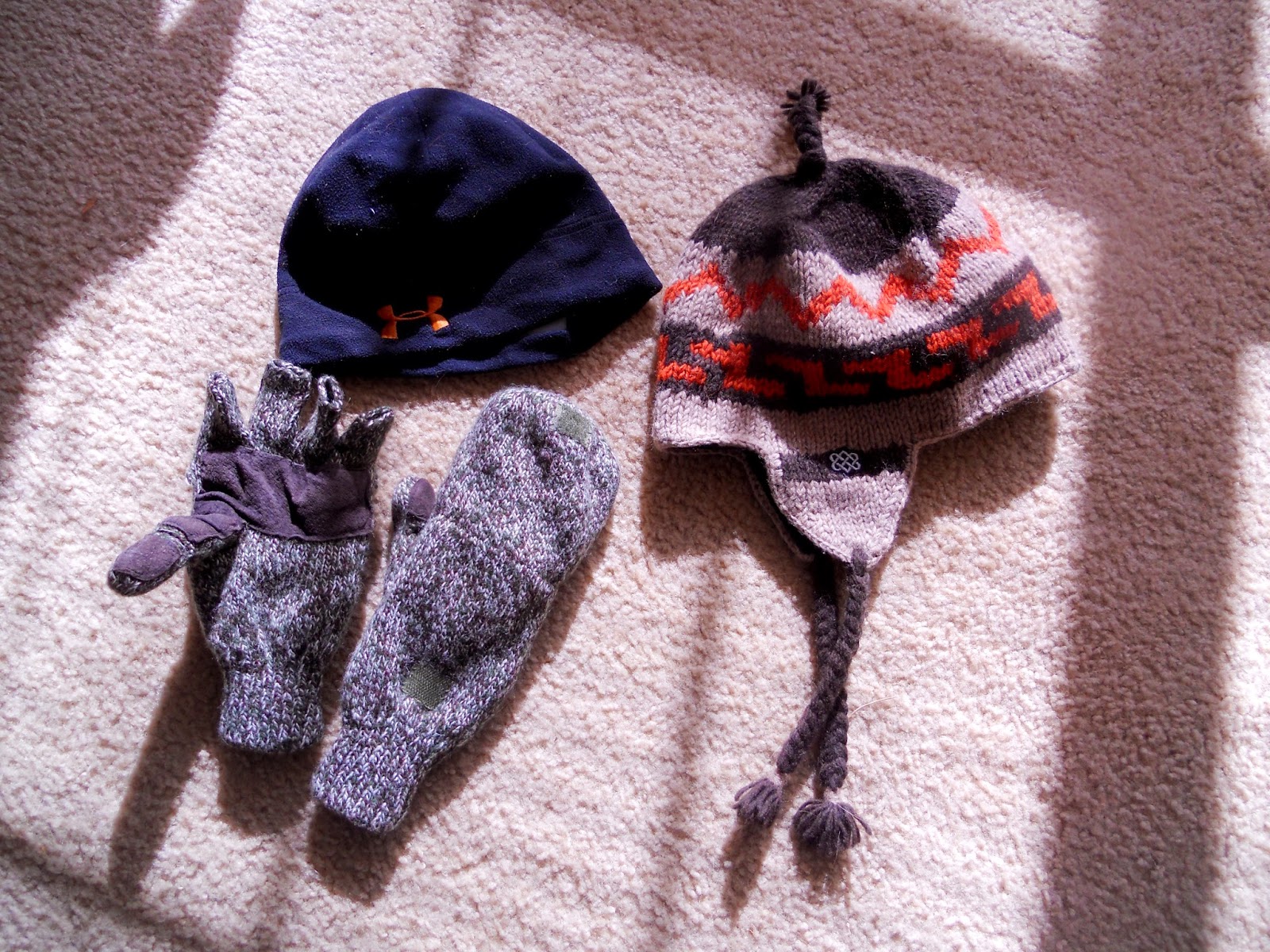
Now for the top half. It's the general rule to start with a base layer of a synthetic material which will dry faster if it gets wet. I tend to ignore this rule and wear a t-shirt instead. The next layer is what I consider the warming layer. I prefer a nice thin fleece shirt as you will see me wearing in many of my fishing photos. I follow this with one of two outer shells if need be. On colder days in which there is little to no chance of rain I prefer a windproof fleece jacket. For those rainy days there is one item that no fly fisherman should be without, the wader jacket. The nice thing about layering is that you can wear any combination of these items to suit your needs. You can accessorize as you see fit with a beanie and or wool gloves. 

The wader bag.
When its this cold out it is a good idea to toss a few extra items into your wader bag as well. If you accidentally take a dip your going to be in real danger of hypothermia which could ruin your day of fishing. For that reason you should have extra change of of clothes starting with another pair of socks. If you happen to have a second pair of wader pants you should pack them as well. If not you can bring that pair of sweat pants that probably have the name of your favorite football team down the leg. Its not about looking cool if you have to change into them, its about getting warm. Don't forget another top. Perhaps the matching sweatshirt. Its also nice to have a warm lunch while on the water. That is why I like to toss one of my trusty old jet boils in the mix. Not only can you cook some Ramen, but if you need it you can make a hot cup of spiced cider in just under two minutes.

I know this may be redundant, but I hope that at least a few of you get something out of it. If anything, you might remember to pack that second pair of socks.

See you on the trail,
Lance

Saturday, October 5, 2013

A Little Fishing With Doc

Hey Everyone,


I had my first guide trip of the fall the other day. It turned outto be a perfect day to be on the water. I got to the river at about eight to scout out some potential spots, which didn't take me long, and waited for Dr. Chuck Balch to arrive. Doc has been practicing tenkara for about a year now and asked if I could show him some more techniques and tricks with tenkara. We started the morning with a small Kebari and worked on a couple methods with it. I noticed that the trout really didn't want anything under the surface which seemed to be a consistent trend thought the day. Instead they were actively popping the
surface. I asked Doc if he had tried much dry fly fishing with tenkara and he stated that he hadn't. Having another rod with me I decided to tie on a small yellow caddis and showed him a dead drift into a skitter technique. Well when a brookie came up and almost crushed the caddis on the skitter it didn't take much more convincing for either of us. Doc took the rod and almost immediately hooked a trout on the skitter. He was more than impressed with the method. He hooked several fish and I think had just as much fun teasing the fish and watching them miss as he did when he would hook one. I think you could probably do a skitter if you had a long nymphing rod but I truly believe that nothing will allow you to control the fly quite like tenkara. I really like what tenkara has brought to the sport of fly fishing. Tenkara may not be the right tool for every type of fishing but sometimes there is nothing better. I'm happy to have had the chance to spend the day with Doc and tech him a few more techniques which I'm sure he will use on his future tenkara adventures.

See you on the trail,
Lance

Saturday, September 7, 2013

What They Look Like - Trico

Hey Everyone,

With the weather cooling down and the rain finally subsiding, the fall fly fishing season just around the corner, and I'm sure you all are ready to get back up to those trout streams. The trout will be starting to fatten up for the winter and Brown and Brook trout will be feeding heavily to get ready for the spawn. The question is what are those trout feeding on? Everyone knows about the plentiful spring hatches but most forget about the few insects that hatch into the fall months. One of those insects is the small Trico mayfly, Tricorythodes Stygiatus to be exact. These little olive colored mayflies are one of the few mayflies that can hatch into October. Because of this many people mistake it for the blue winged olive. While BWO's are small as well, they don't get much smaller than a size 18. However, the smaller Trico can be as small as 28. Male Tricos emerge throughout the night and are not known to be important as duns. They molt into spinners and await the hatching of their mates. The little olive females emerge in the morning. In the summer this happens at first light, but it occurs later in the day as the weather cools down. Female duns can be important to trout, as can the nymphs as they rise to emerge. The female emergence can be fun to fish, but its action rarely compares to the spinner fall.
Tricos return as spinners soon after emerging, sometimes within a few minutes and sometimes a few hours. There is a widespread misconception that Trico duns molt into spinners in mid-air. This is physically impossible. Tricos must land to molt, but some of them take off again before the dun shuck has completely detached from their tails. This give the impression of a mid-air molt The mating spinners gather in very tight swarms rather than roaming the full width of the river.
After mating, the males fall spent and the females fly to shore to rest while squeezing little green balls of eggs from their abdomens. They return in about half an hour and fall on the water to drop the eggs. Just remember that when imitating this little mayfly, getting the hook size right can be very important.
Next time you're on the stream you will be able to recognize these little guys (and girls) and will get to enjoy some crazy small dry fly action. Who knows you may join the ranks of the 24 / 24 club.

See you on the trail,
Lance

Friday, August 16, 2013

Catch and ?

Hey Everyone,


I talk to a lot of fisherman everyday. Everyone knows that I am a die hard fly fisherman and although you can fly fish for just about anything, I do talk about trout fishing a lot. One of the things that I hear all the time from catch and keep guys is "well after being caught trout will die anyhow". I always try to explain the facts to them. Although I don't really think what I say is going to change the way they fish anyhow. I almost always catch and release as keeping fish is not the reason that I'm out there. However, I am not against some trout cooked over a campfire. Here is a really well written blog article that kinda argues for both sides Is Catch and Release Over Hyped. If you're a catch and release fisherman and want to know more, here is some really cool info that I have collected from various sources on the subject of practicing catch and release and why mortalities occur and how to help prevent them.


Fish that are caught and released may die for several reasons, but the two primary causes are stress and wounding. Stress results from the fish fighting after being hooked. Internally, the physical exertion causes an oxygen deficit in the tissues, forcing the muscles to function anaerobically (without oxygen). This causes lactic acid to build up in the muscle tissue, and then to diffuse into the blood. Lactic acid acts as an acid in the blood, causing the pH of the blood to drop. Even slight changes in pH can cause major disruptions of the metabolic processes, ultimately killing the fish. If the fish is quickly released, its blood pH usually returns to normal and the fish will be unaffected. Some fish, after a long tow, may appear to live once released, but the imbalance in the blood chemistry may kill them as late as three days after being caught. In most cases, the means of preventing this type of mortality is to not keep the fish in action for a long period of time, unless the intent is to keep it.
The other primary cause of mortality is wounding by the hook. Injuries caused by hooks can range from very minor to lethal. The degree of injury is dependent on the location of the hook wound. Higher mortalities will occur in fish that are hooked in the gill or stomach areas, while lower mortality's occur in fish that are hooked in the lip, jaw, or cheek areas. Baited hooks are more likely to result in a gill or stomach hooking that artificial lures. Treble hooks, for obvious reasons, will result in more puncture wounds and subsequently higher mortalities. Barbless hooks facilitate release and decrease "out-of-water" time, but for reasons yet unclear, may not significantly reduce mortality, especially when used with bait.
There are other kinds of physiological stress that can lead to higher mortality's in released fish. Fish may not be able to adjust to changes in pressure or to higher surface water temperatures. Also, when a fish is handled or comes in contact with dry surfaces, such as landing nets or dry hands, its mucous layers – commonly called slime layers – may be partially removed, presenting an opportunity for bacteria or pathogens to invade the skin.
  
How to prevent fish mortalities

  • handle fish as little as possible and release them quickly - do not fight fish to exhaustion
  • minimize or eliminate the time fish are out of the water - as little as 30 seconds of air exposure causes delayed mortality of released trout
  • consider using only artificial lures - their use is mandatory on some waters
  • use barbless hooks if you plan to release most of the fish you catch
  • when a fish is deeply hooked, do not try to remove the hook - clip the leader instead
  • during the warm summer months when stream temperatures are elevated, do not fish for trout if you plan to release them - these fish are already stressed and additional handling may kill them
  • likewise, do not fish for trout in spring holes when water temperatures are in the mid 70s or higher (especially if you plan to release them)

I hope this sheds some light on the subject and helps you out.

See you on the trail,
Lance