Monday, February 11, 2013

Winston-Salem Fly Fishing Show

Hey Everyone,

I had a great weekend attending the Winston-Salem fly fishing show as part of the Tenkara USA team. I was really happy to see the interest in tenkara here in the east. The booth was bustling for most of the weekend. I'm not going to bore you with a type up of the weekends events. However, I will share one experience and an observation.
I was walking in on Sunday before the show sipping my coffee and day dreaming when I hear "good morning" from my right. I look over to see Bob Clouser looking at me. Containing myself, I returned the greeting with the added standard coffee cup lift and continued down the hall. I was thinking about how cool that was when I entered the hall and see Lefty Kreh standing there. We also exchange pleasantries. If that wasn't cool enough I was later walking the booths, as all of us do, when I hear "how are you?" I look to my left and sitting there is Dave and Emily Whitlock. I couldn't believe there wasn't a line or crowd (as there usually is). We talked a bit about his art as we flipped through some prints. I know for some that might not seem like a big deal but as a kid from a small town in western NY, I spent many days in front of the wood burning stove reading articles about these guys, never imagining I would ever meet them. I was really impressed with how kind and approachable everyone was. I guess that is just one more reason that I love fly fishing. Its not only the time on the river, and cool gear, but every person you meet is as friendly as the last no matter how well known they may be.

Here are a few photos I managed to snap. I didn't get many because we were fairly busy.

 The crew at work.
 Jay "Fishy" Fullun showing us his Kabari box
 Loften Deprez at 15 hes already an accomplished tier. Tying up some Sakasa Kabari
 Daniel Galhardo explaining the method behind the madness
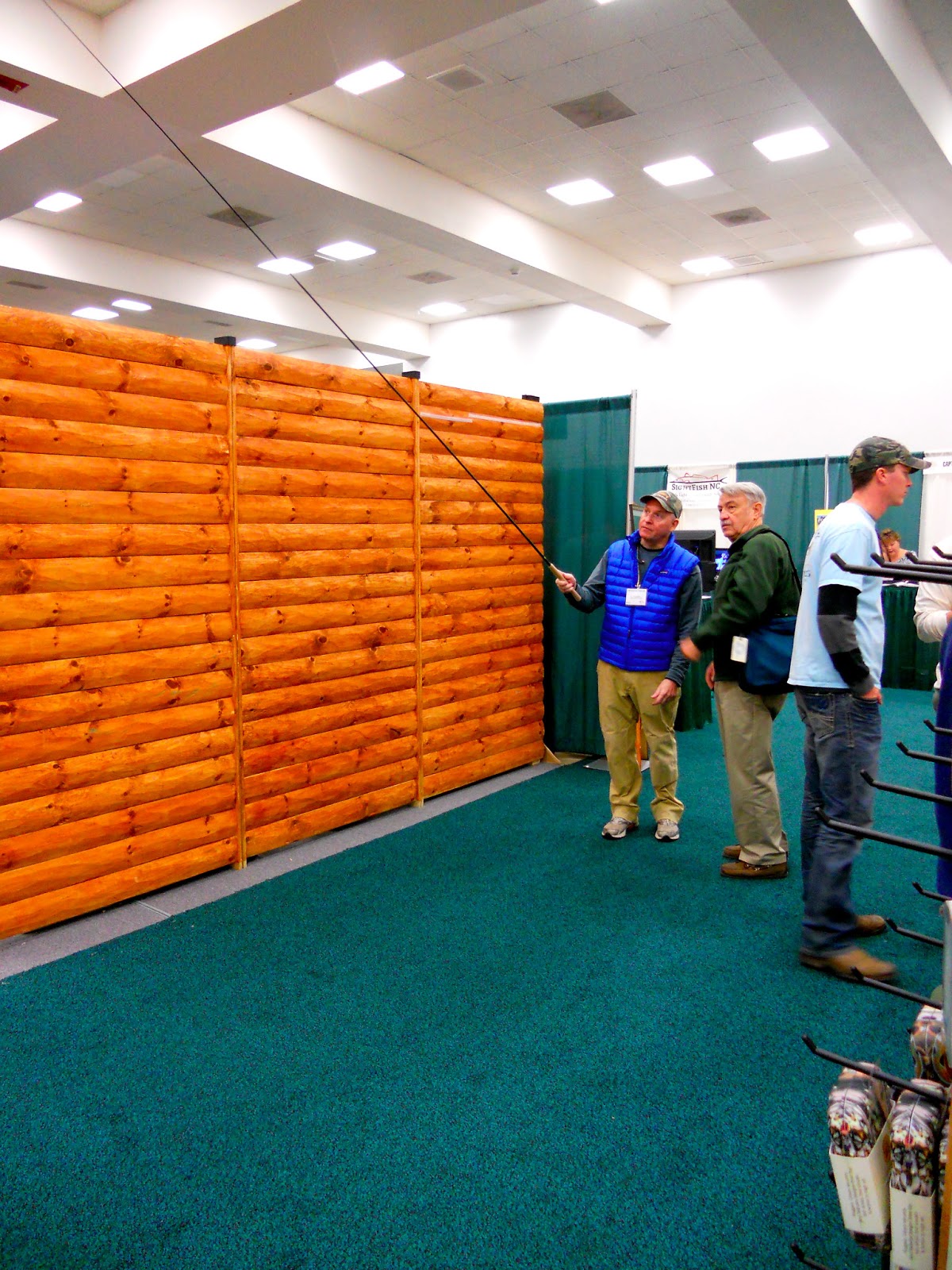
Tom Sadler (Mossy Creek Fly Fishing) showing off a Tenkara rod

As I said I had a great time. I can't wait to hang out with everyone again.

See you on the trail,
Lance

Tuesday, January 22, 2013

What They Look Like - Scuds

Hey Everyone,


This year I have been playing around with a "fly" that I have only used on lakes before. I started to really think about winter insects like bwo's and winter stone flies, and then it dawned on me. Not everything has to hatch. That's what got me thinking about scuds. For those of you that think I'm talking about my time in Iraq not to worry. I'm talking about a small species of fresh water shrimp. These small crustaceans live in almost all bodies of water including caves and water twice as salty as the sea. Because they are pretty much defenceless they tend to hide in vegetation and are mostly nocturnal. Also because they are semitransparent scuds take on the color of their surroundings. Paying attention to the colors in the water will tell you what colors are best to run although olive and tans are most common. In some lakes scuds are one of the most abundant food sources for trout making up to half of a trouts diet. Although scuds can reproduce a few times a year they do not "hatch" thus making them a viable fly to fish year round. Because scuds don't venture from cover often they are best fished near to or bouncing along the bottom. Next time your on the river and can't seem to find anything they want, try a scud, you may be on to something.

See you on the trail,
Lance

Thursday, January 10, 2013

On The Move

Hey Everyone,

One of the first things I do when I arrive at the river is to take a walk. Not for exercise, but for information. I walk to the first run or hole that I can see into. I want to know where the trout are holding. Its important to remember that where you see, lets say, a Rainbow, may not be where the brookies or browns are. Each species will hold in different places and will change where they hold at different times of the year depending on environmental factors. I know that you don't want to read some boring scientific article so I'll try to make it quick but still provide some information for those who wish to read on. For those who don't scroll to the bottom. I made a chart.

Because trout are cold blooded water temperature is the most important factor in trout behavior. These changes can take place seasonally, daily, or even from one hour to the next. Also as water temperatures change so does its ability to hold oxygen. causing trout to move back and forth from fast riffles to deep pools.

In early fall as water temps reach the mid 50's to high 40's and oxygen saturation levels are around 10 to 13 ppm (parts per million). Hatches of mayflies and caddis take place triggering trout to move into swifter currents to feed. Especially bookies and browns who feed heavily in anticipation of spawning. You will also notice male brook and browns become much more aggressive from the increased testosterone. Rainbows will follow this pattern as well to feed knowing that cooler temperatures mean winter is around the corner.
In mid winter as water temperatures fall into the lower 40's to higher 30's and oxygen saturation levels rise to 13 to 15 ppm. Brook and brown trout will move to slower water and begin to spawn. This is when you will notice females become tight lipped and unwilling to move while aggressive males jockey for position behind females. Rainbows on the other hand will stay in the currents and be on the hunt for eggs that get kicked up.
Once the fall spawn is over and the water temps drop into the mid 30's trout will move to deeper pools and away from the faster water. Holding in deeper water keeps trout safe from ice flows and icy bottoms. Also with oxygen levels at their highest at 15 to 17 ppm there is no need to expend energy in faster water.
In the spring as water temperatures start to rise back into the 40's the rainbows start their own spawning rituals. Oxygen levels drop back into the 10 to 13 ppm. Trout once again begin to move back into faster water in order to take advantage of spring insect hatches. Browns will begin to take cover in and around structure looking for young fry and may become more nocturnal in their feeding habits.
In mid summer water temperatures can rise into the 70's and oxygen levels drop to their lowest points of only 5 to 7 ppm. This causes all trout to move up into fast riffled water. With an abundance of insects on the water fish feed heavily. Early evenings and inclimate weather are big feeding times as terrestrail insects get washed into the water fish will move to river edges to feed.

Here's that chart I told you about


Seasonal Range
Water Temperature
Oxygen Saturation
Holding habitat
July- August
60 – 70
5 – 7 ppm
Fast Riffles and oxygenated water like plunging pools

September – October
45 – 55
10 – 13 ppm
Back edge of rifles. Runs and seams

November – February
32 – 45
13 – 15 ppm
Slow deep seams and backs of deep pools

March – April
40 – 50
10 – 13 ppm
Deep seems and riffle edges

May – June
50 – 60
8 – 10 ppm
River edges and faster moving runs.

Of course there is some overlap on the seasons depending on where you live and how rapid these changes happen.

I hope this helps some of you out and next time your on the river and see trout all holding in different spots you'll know why.

See you on the trial,
Lance


Sunday, December 30, 2012

The 25

Hey Everyone,

Well I'm sure that soon enough we will all get our fill of new years resolution blog post. They will be filled with reflections on this past year and the inevitable video montage. I know that I have been guilty of this in the past as well. So, I decided that instead of boring you to death with "this has been a great year" and "this is what I'm going to do" I would let you in on a little challenge that I have been doing for a year now. I call it the 25. It came to me one day when for no good reason I thought it might be fun to catch a carp on a fly rod. Well it was awesome! So, I decided to see what else might be fun to catch. I looked up all the freshwater game fish and made a list of the ones that I thought would be the most fun and within reasonable distance to catch. I have to admit that it has become less of a list and more of an adventure for me though. Its amazing the places you will end up like a crystal clear pond in New York state full of black and white crappie. Or to hike in three miles through the woods in June to find that slack water where you saw a long nose gar the year before. I have typed up my list here so that you can try your luck, skill, patience, what ever you call it and see if you can catch the 25.

Shad
American
Hickory

Bream
Blue Gill
Flier 
Green Sunfish
Pumpkin Seed
Red Breast Sunfish
Red Ear Sunfish
Spotted Sunfish
Warmouth

Crappie
Black
White

Bass
Large Mouth
Hybrid
Red Eye
Small Mouth
Spotted
Stripped

Trout
Brook
Brown
Rainbow

Long Fish
Chain Pickerel
Longnose Gar
Muskellunge

Carp
Common Carp

Obviously you can add to this list or you can create your own. Either way let me know if you take up the 25 fish challenge. And if you know a good spot and want to try and catch one on my list with me...well I say lets fish.

See you on the trail,
Lance

p.s. You can click on each fish for a little more info about that species.

Thursday, December 20, 2012

Watch Your inHg

Hey Everyone,

If you're a dedicated trout bum like myself you watch the weather a lot. I don't mean to make sure you wont be rained on or to see if you'll be able to feel your fingers that morning. If you know me then you know I don't care about a little rain and a cold day to me means no body else on the water. I watch the weather to see what it is doing. See knowing what the weather has been doing and what it is going to do tells me a lot about what the fishing is going to be like for the day. See as the weather changes so does the barometric pressure. How does this affect the fishing? A trout has a small bladder called a swim bladder which acts as a buoyancy compensator. As the barometric pressure changes trout can feel those changes on their swim bladder. Think of a time that you ate way too much and felt like crap all day. The average measurement for atmospheric pressure is around 30 inHg (inches of Mercury) with 30.5 being an extreme high and 28.5 being an extreme low. Consequently, a rapid rise or fall or and extended period of extreme high or low can make a difference in the quality of fishing on any given day. A slight change of just +/- 0.02 inHg is enough to affect a trouts eating habits. Having flash backs of high school biology? Here is a easy chart that I think will help.

Pressure Trend Typical Weather Fishing Trends Suggested Tactics
High
(30.5 inHg)
Clear Skies Fish seek shade or cover Use sub-surface flies such as nymphs or wet flies. Fish close to cover and in deeper water over a dark bottom.
Rising Skies clearing Fish are slightly more inclined to feed Fish with brighter flies close to cover. Try Attractor nymphs or streamers.
   Stable
Fair
Expect normal feeding behavior Trout are more inclined to feed both on and below the surface.
Falling
Rain Imminent
Often the best time to fish Try slightly larger flies. Also a good time to with large nymphs and streamers
Slightly Lower
Rain starts
Bait fish seek shelter in the shallows.
Bigger fish come out to hunt.
Try larger streamer patterns such as Dace, Sculpins, and Crayfish.
Also try larger nymphs such as Giant Stone Flies or Helgramites
Low
(28.5 inHg)
Rain and high water
Trout tend to become less active during extended periods of low pressure
Try smaller nymphs and streamers.


I hope this helps.


See you on the trail,


Lance


Saturday, December 15, 2012

Old Method, New Trick

Hey Everyone,

So, there has been a ongoing issue with level lines used for Tenkara, visibility. There are a few suppliers of high-vis level lines. With that being the case there are several DIY anglers that would like to make their own lines for various reasons. The problem is that most fluorocarbon lines are clear. This is for a couple reasons. For one, fluorocarbon is supposed to be more difficult to see underwater making it a very stealthy line for finesse fishing. Also, any time that you color fluorocarbon you actually weaken it a bit because to color it the pigments must interrupt the molecular strain that makes up the line. The problem for Tenkara anglers is that being able to see the level line is a good thing. The question is, how do we make a clear line well, not so clear? There have been a few methods tested out like Jason Klass's post about coloring the line with paint markers.


I was thinking about this one day and an old idea that I have used a few times for nymphing on western fly rods. The method is to use the foam from the twist ties that are used on some fly line spools. The trick is to pull out the metal wire inside (which is easily done) and then slide your leader into the now hollow foam tube. This makes a very nice and very sensitive strike indicator. I thought, "why cant I slide that on to the end of a level line?" Ive included a few pictures so you can see what I'm talking about. I personally put a perfection loop in the end of my level line and let the "indicator" sit against the knot. I think it would work just as well against any type of knot you use to connect your level line to your tippet. I haven't used it yet for Tenkara since I have been fishing a lot of dries with my Tenkara rods lately, but I can tell you it works pretty good on western rods. I'll give it a shot next time I'm out and tell you how it works. If any of you get a chance to try it out let me know what you think.

See you on the trail,
Lance


Thursday, December 6, 2012

What They Look Like - Winter Stone Fly

Hey Everyone,

I was on the river the other day and I wasn't seeing many hatches coming off that morning. I felt kinda perplexed since the trout were turning quickly and I could see them in the clear water grabbing something. I assumed it was midges although I hadn't seen any in the air yet. I caught a fish on a small emerger and that's when I saw what they were keying in on. A small winter stone fly was on the side of my hand. I then realized what the trout were hitting. I knew that by default I had a good fly on. I did change my caddis to a darker body. I spent the rest of the day landing several nice fish. If you see these little guys crawling around its a safe bet that the trout are eating them. They are not very big usually around a size 16 through 20 but in the dead of winter they are a very viable food source for trout. Since they crawl out on rocks or vegetation, there aren't too many emerger patterns. However, I would suggest a black or red copper john as a dropper which will imitate the nymph. You can also tie a elk hair caddis in a black body with a light brown or white wing in size 16 or 18.


Wet Nets,
Lance